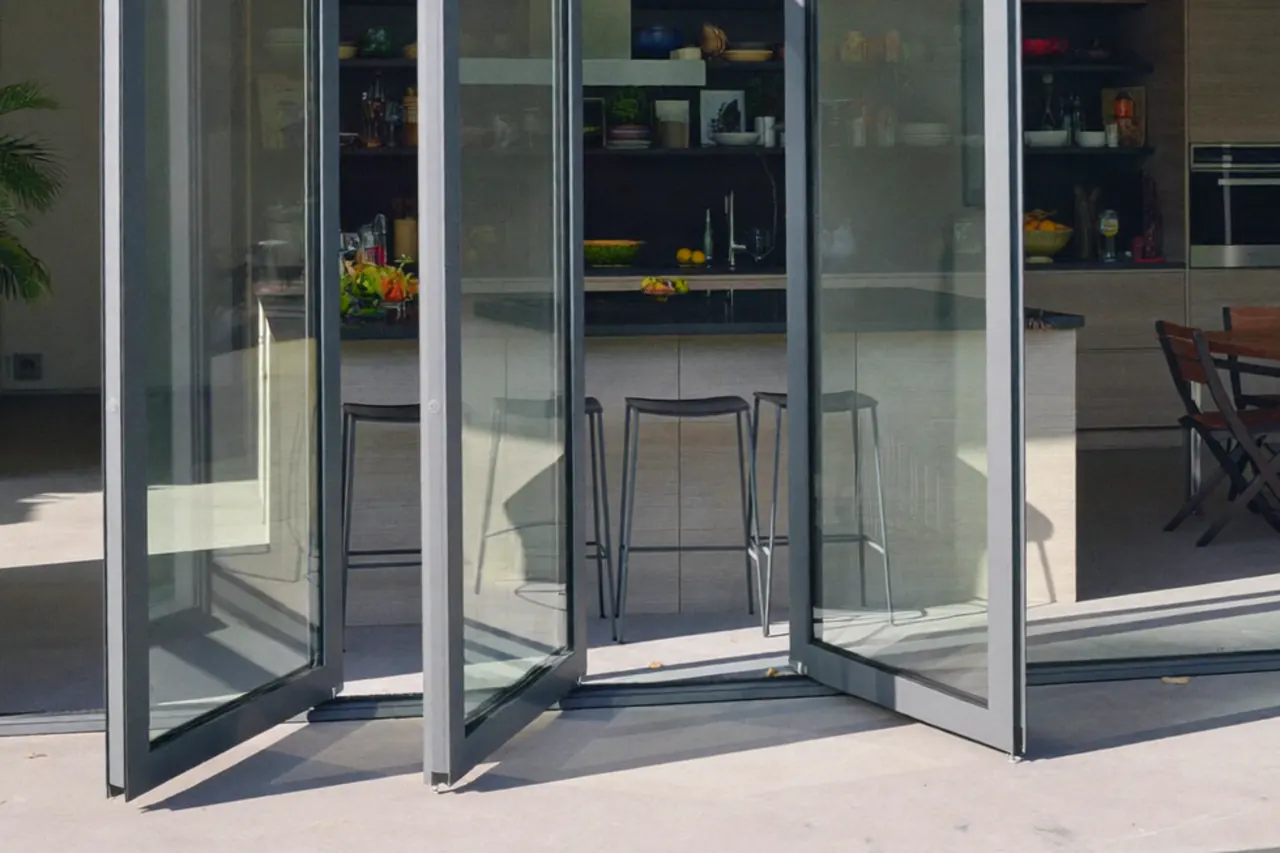
French vs patio vs bifold doors
When you open up the back of the house to the garden, three door styles dominate the choice: French doors, sliding patio doors and bifold doors. They do a similar job — a wide, glazed opening onto the outside — but they behave very differently in terms of how they open, how much space they need and what they cost. This guide compares French doors vs bifold and patio designs so you can match the door to your room and your budget.
French doors
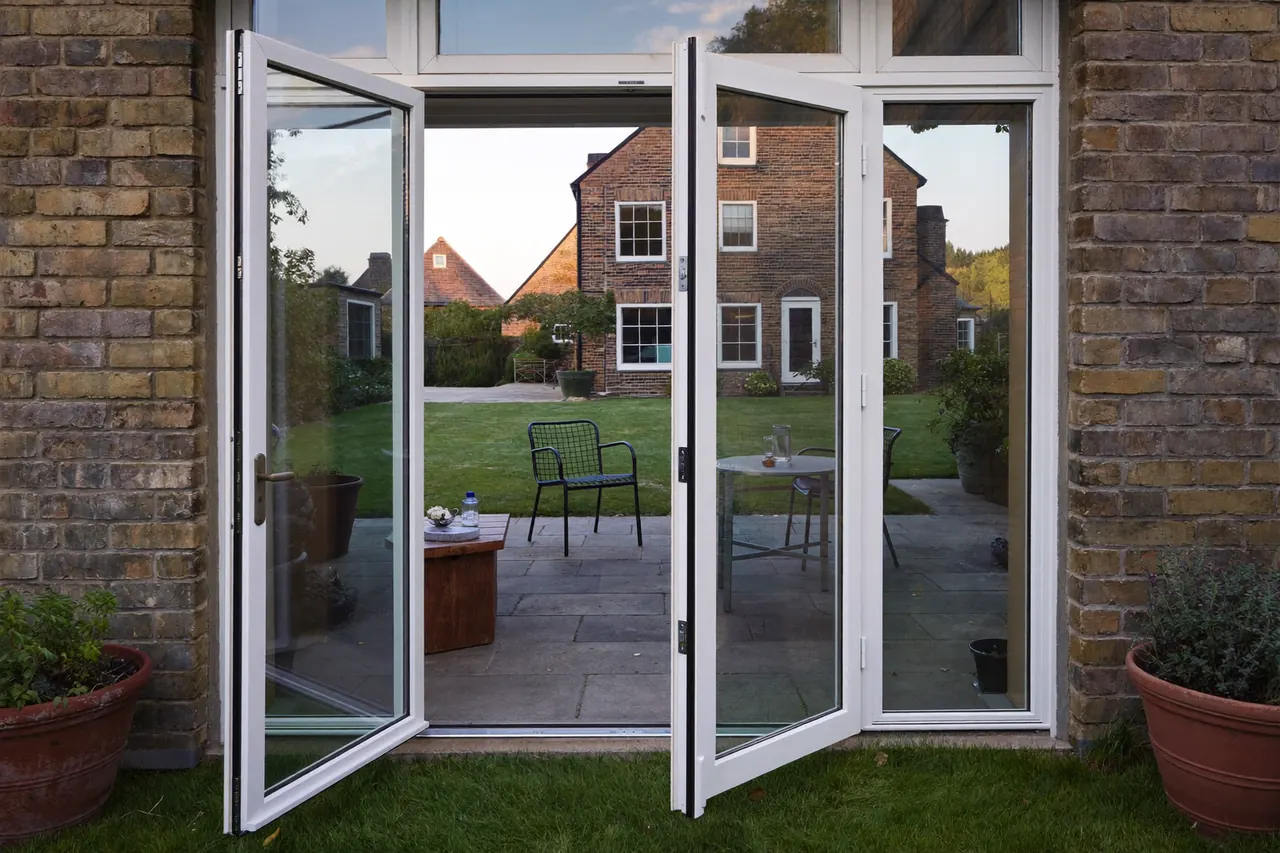
French doors are a pair of hinged doors that meet in the middle and swing open. They are the classic, cost-effective choice for a standard opening, they suit period and traditional homes beautifully, and with both leaves open you get a generous, symmetrical gap onto the garden. The trade-offs: the leaves need clear space to swing (usually outward or inward), and the central meeting rail means there is always a frame in the middle of the view. For most two-to-three-metre openings, French doors are hard to beat on value.
Patio (sliding) doors
Sliding patio doors run on a track, with one or more panels gliding past a fixed pane. Because nothing swings, they are ideal where floor space is tight — furniture can sit right up to the glass. Modern sliders use large panes for an almost uninterrupted view, and the newest inline systems feel effortless to move. The limitation is that the opening is never fully clear: one panel always overlaps another, so you can open perhaps half to two-thirds of the total width.
Bifold doors
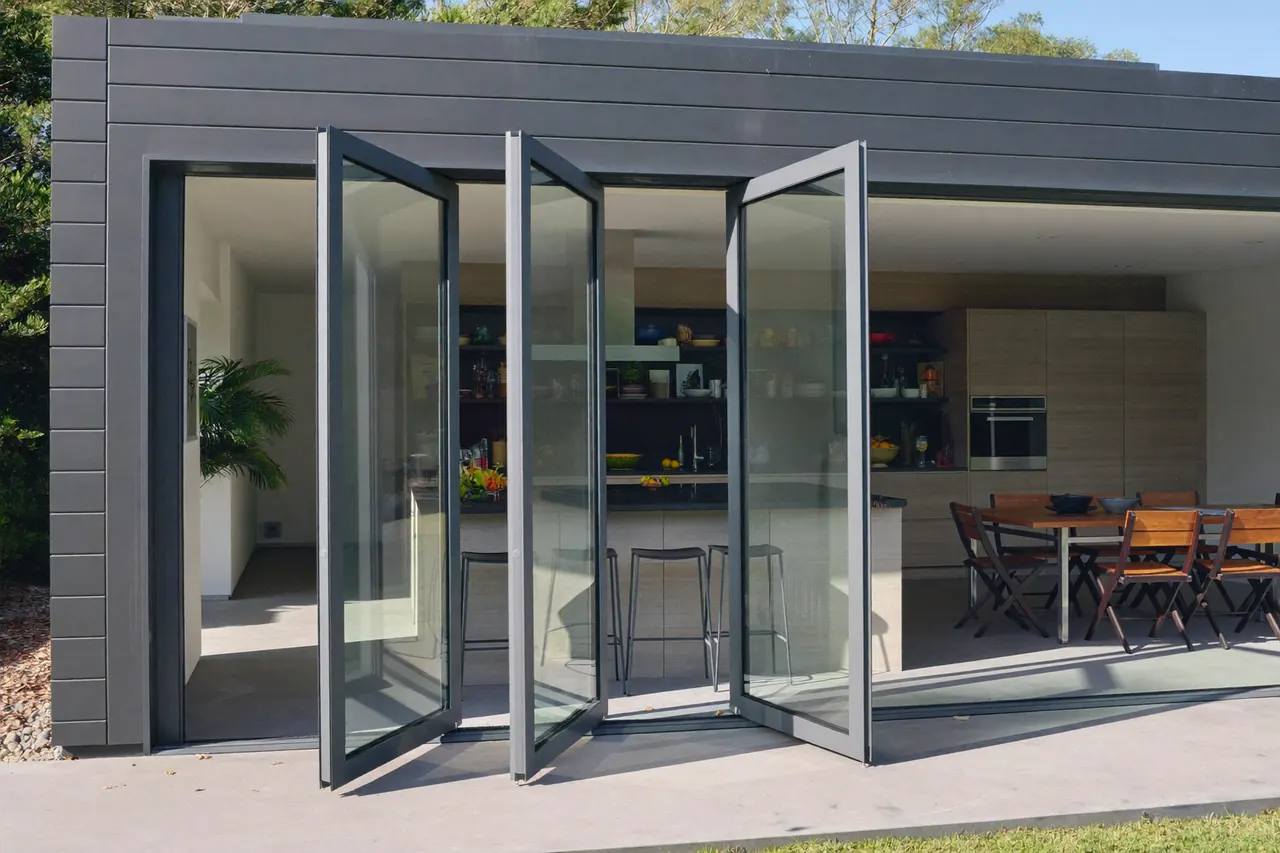
Bifold doors are a run of panels hinged together that concertina and stack neatly to one or both sides, opening up almost the entire width. They are the showpiece choice for kitchen extensions and open-plan spaces where you want the wall to effectively disappear in summer. The considerations are cost — bifolds are generally the most expensive of the three — and the fact that the folded stack needs somewhere to sit, and there are more frames in the glazing when the doors are closed compared with a large slider.
Not sure which suits your room? A free home assessment measures up and talks options.
Check my eligibility →Side by side
| Feature | French | Patio (sliding) | Bifold |
|---|---|---|---|
| Typical cost | Lowest | Middle | Highest |
| Clear opening | Full pair | Part width | Almost full width |
| Space to operate | Swing room needed | None (slides) | Stack space needed |
| View when closed | Central rail | Slim frames, big panes | More frames |
| Best for | Traditional homes, tighter budgets | Compact rooms | Extensions, wide openings |
Which should you choose?
Pick French doors for a traditional look and the best value on a standard opening; a slider where floor space is precious or the view matters most; and bifolds where you want to throw the whole back of the house open. Insulation is good across all three when you specify quality double glazing, and it is worth understanding how much energy new windows can save so glass and frame performance feed into your decision. Whichever you choose, a clean, weather-tight fit is everything — see our notes on choosing a trustworthy installer.
Rear doors are often replaced alongside the windows and the front door, and doing it in one go keeps the finish consistent — our page on windows and doors packages explains how. If cost is the sticking point, there are window and door funding and contribution options, subject to eligibility and a home survey, and you can review funded glazing options as well.
Ready to open up the garden? Two quick questions and we will match you with a local installer.
Check my eligibility →